
You write something cool, spend time on it, and then, bam! You see it ripped off, word for word, on some website overseas. Different language, different web address, but the same stolen stuff. You’re probably wondering if you can even do anything about it internationally. The good news is that you can, but how you do it matters.
This problem of content theft is growing day by day. So, everybody should have an idea of how takedown notices work and how you file them. Let us understand in which countries the DMCA applies and how we can make sure that our content is protected worldwide.
The Growing Problem of Cross-Border Content Theft
Content theft has been happening for a while, but now it’s a worldwide thing. People are copying blogs, videos, pictures, and even whole product descriptions and putting them on websites in other countries every day. They do this because they think they won’t get in trouble across international borders. But they’re wrong about that.
Creators actually have more power than they think because of copyright laws around the world and how platforms are enforcing them. The key is knowing how to use that power the right way. That’s where an international copyright takedown is helpful.
1. What Is an International Copyright Takedown?
Taking down copyright stuff internationally means getting content removed from websites or platforms in other countries when they’re using your work without asking. Here’s the usual way it works:
- Send a DMCA takedown notice.
- Complain to the platforms or hosts.
- Use international copyright rules instead of going to court locally.
It’s way quicker, cheaper, and easier to deal with copyright violations online this way compared to suing someone.
2. Does the DMCA Work Outside the United States?
Here’s where it gets tricky. The Digital Millennium Copyright Act takedown thing is a US law. So, how does that work across the globe? Well, the platforms handle it.
Yeah, places like Google, YouTube, Facebook, Instagram, and most big web hosts are all over the world. To keep things legal and not get sued, they respect DMCA notices and take stuff down everywhere, even if the website breaking the rules is in another country.
So, even if the law is from the US, it’s applied worldwide. That’s why you can often get copyrighted stuff taken down internationally without going to court.
The Legal Backbone Behind International Copyright Laws
Your copyright doesn’t just vanish when your stuff goes overseas, and that’s on purpose. Most countries are part of the Berne Convention, which ensures that your creations are protected in all the countries that signed up.
That’s why copyright laws worldwide link up, and why taking down stolen stuff globally makes sense legally. Simply put: if you made it, and someone copies it in another country, you still own it.
DMCA Ignored Countries: Myth vs Reality
You’ve likely heard the term DMCA-ignored countries online. It sounds intimidating, but it’s often misunderstood. Here’s the deal:
- Some countries don’t make their local courts uphold US law.
- Some web hosts are slow to respond to copyright claims.
- Some copyright violators hide behind unreliable hosting companies.
This doesn’t mean copyright is ignored completely. It just means enforcing it moves from courtrooms to online platforms, search engines, and internet providers.
Often, just making something harder to find (like removing it from Google’s search results, shutting down its web hosting, or stopping its income stream) works better than suing.
How to File an International Copyright Takedown (Step by Step)
If you’re asking, how do I file a takedown notice?, here’s the practical breakdown.
1. Identify Where the Content Is Hosted
You should identify it first. Is it on a website, social media platform, marketplace, or blog network? This determines where you file. You can check that out on whois.
2. Prepare a Proper DMCA Takedown Notice
A valid DMCA takedown notice must include proof that the content is yours, the URLs of both the original and infringing material, and a sworn statement of good faith. Missing any of these details is the most common reason takedown requests fail. Ensuring all information is accurate and complete is essential for a successful removal.
3. Submit a DMCA Complaint
You should send your DMCA complaint to the platforms where the content appears, such as Google, YouTube, or Meta, as well as to the hosting provider. If necessary, you can also submit it to search engines to ensure the infringing content is properly addressed and removed from visibility.
4. Monitor and Follow Up
Some takedown cases are resolved within hours, while others require persistence and careful follow-up. This is especially true for international cases, which often need ongoing monitoring to ensure the infringing content is fully removed.
This process is the core of a successful international copyright takedown. If you want to skip the hassle, then let the experts at DMCA Desk do the crucial work while you focus on the brand’s reputation and growth
Common Mistakes That Get International Takedowns Ignored
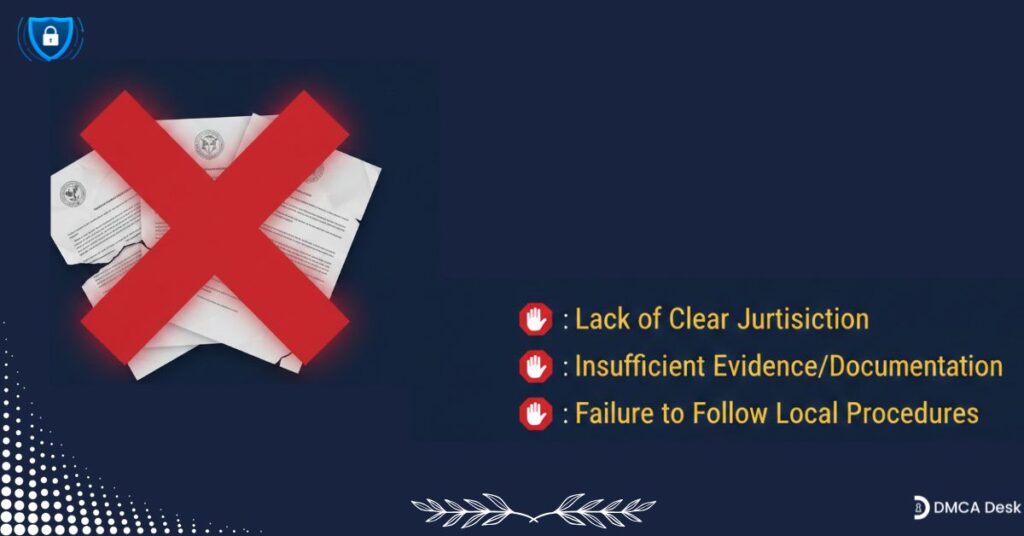
Let’s save you time and frustration. Here’s where most people mess up:
- Filing in the wrong jurisdiction
- Sending notices to the website owner instead of the host
- Using generic templates that don’t meet legal standards
- Assuming courts are faster than platforms (they’re not)
- International enforcement rewards precision, not panic.
Scenarios When International Takedowns Have Worked
1. Big Fashion Brands Try to Get Images Off Blogs:
Remember that time Ralph Lauren tried to get a blog to take down a really edited version of their ad? They used copyright laws to do it, which shows how brands try to control their online image.
2. Photographers Get User Content Sites to Take Action:
In a court case, Photobucket (a big site for user content) quickly removed copyrighted images after the photographer sent them a proper takedown notice. This shows that even big international sites respond when you follow the rules.
3. Record Labels Make International Platforms Take Stuff Down:
EMI and other record labels used copyright notices to get a music service to remove copyrighted songs. The court said the service was responsible for not taking them down sooner. This proves that copyright rules can work no matter where the content is stored.
That’s why international copyright strategies concentrate on getting seen and following the rules, not just where something is located. Platforms with a global reach often react to well-written notices, even if the content is outside the rights owner’s country.
How DMCA Desk Handles International Copyright Takedowns
DMCA Desk is great at dealing with reporting and trademark infringement internationally and making sure your stuff is safe everywhere. Instead of taking forever with legal stuff, they go straight to the source and send DMCA notices that follow all the rules to the right places.
The team keeps an eye on forums, blogs, social media, and websites to catch anyone who keeps stealing content and gets it taken down ASAP. By watching trademarks, removing things from search results, and keeping up with requests, they get the best results possible. Every notice is made carefully with proof that you own the content, the links to your original stuff, the links to the stuff that’s been copied, and a statement that you’re doing this fairly. They know what each platform needs, so there are fewer problems or delays.
Even if your content is in countries that usually ignore DMCA requests, they have a plan to handle it. With DMCA Desk, creators and businesses can quickly get stolen content removed and not have to worry so much about their intellectual property.