
In 2026, SEO isn’t just about ranking signals anymore; it’s about survival signals. A single DMCA notice can wipe out years of natural growth in just a few hours. Google says that copyright violations don’t directly affect rankings, but the DMCA has a very different effect on SEO in the real world. Pages disappear from search results, traffic stays the same, and rankings don’t always come back the same.
It’s no longer optional for publishers, SEOs, and brands to know how Google deals with DMCA notices. It combines technical SEO, risk management, and brand protection into one. If you’re worried about sudden traffic drops, this guide explains the DMCA impact on SEO and shares the exact steps you can take to shield your site from legal and technical risks and handle forum and blog content removal.
How Google Treats DMCA Notices in 2026
Google sees DMCA notices as requests to follow the law, not as signals to change the ranking. Google takes down the reported URL from search results when it gets a valid notice to follow copyright law.
Google follows the rules of legal safe harbour. This means that Google has to act quickly when a copyright owner sends a valid DMCA notice, or else it could face legal action. Speed is more important than looking into things. So:
- Before removing something, Google does not check to see if it is original.
- First, the content is removed, and then it is looked at again.
- Search visibility is lost when you follow the law.
This system puts rules ahead of fairness, which is why the DMCA can be bad for SEO, even for real creators.
Compliance with the DMCA vs. Making Decisions Based on Algorithms
Google’s algorithms always look at how good, relevant, and authoritative the content is. But DMCA takedowns don’t care about any of that. Even if a page is perfectly optimised, useful, and authoritative, it can still be taken down right away if someone complains about copyright.
This difference is important because a lot of site owners think that DMCA-related traffic loss is an algorithm update. When the real problem is legal, not technical, they start changing keywords, rewriting content, or denying links. SEOs can figure out why their rankings are dropping more quickly and accurately if they know how to separate these two things.
Does the DMCA Impact SEO Rankings Directly?
No, it doesn’t directly lower rankings, but it does remove pages from search results, which means that rankings and organic traffic drop right away.
Google follows a ‘notice-and-takedown’ policy where they remove reported content immediately to stay within the law, though you can get it back by filing a counter-notice. Google’s DMCA policy for customers says that while one mistake is okay, having too many valid copyright strikes can lead to your entire site being hidden or your account being banned.
Short-Term Visibility Loss vs Long-Term SEO Damage
A single DMCA takedown usually only causes short-term damage to the URL that was affected. But repeated takedowns can cause long-term SEO problems, such as:
- Broken links within the site
- Less frequent crawling
- New content takes longer to be re-indexed.
- Unstable overall ranking
As time goes on, Google may see domains that get a lot of copyright complaints as higher-risk properties. This doesn’t look like a punishment, but it does show up in inconsistent performance and long recoveries.
Copyright Infringement vs Duplicate Content in SEO
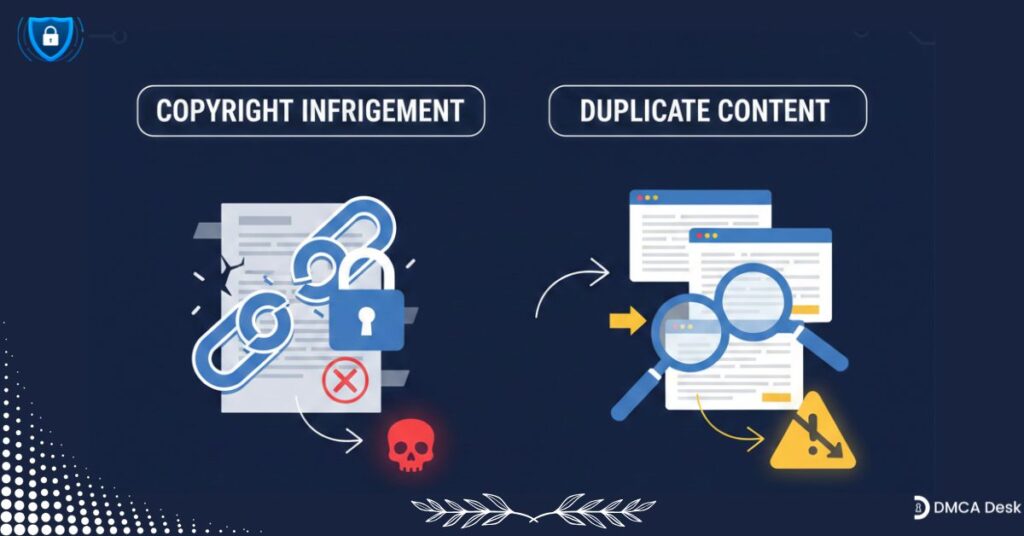
Duplicate content is a problem for SEO that is fixed by algorithms, while copyright infringement is a legal problem that is fixed by DMCA takedowns. This confusion leads to big SEO mistakes.
Duplicate content is mostly a problem for SEO, but Google’s algorithms take care of it. When you search for something on Google, their systems usually only show one version of content that is on more than one URL. This process doesn’t involve any lawsuits or page removals, and the pages that are affected usually stay indexed. You can usually fix these by using technical SEO tools like canonical tags, proper URL structuring, and internal linking.
Copyright infringement, on the other hand, is a legal problem that can’t be fixed by an algorithm. If someone uses copyrighted material without permission, the copyright owner can send Google a DMCA takedown notice. Google takes down the URL right away when it gets a valid notice.
It’s very important to know this difference when figuring out how the DMCA affects SEO.
How Google Determines the Original Content Source
Google uses several signals to find original publishers in 2026, like the time and date when the content was created, a history of consistent publishing is also seen, internal linking also matters, and lastly, the links and citations from other sites.
These signals help Google find original creators, but they don’t stop DMCA takedowns. If someone files a claim, even original content can be taken down for a while. How strong those ownership signals are and how quickly the problem is fixed will determine how quickly things get better.
False DMCA Claims and Their SEO Consequences
False DMCA claims can temporarily take content off of Google, which can cause traffic loss and changes in rankings, thus affecting the SEO of the site.
More and more people are abusing the DMCA in competitive niches. People who do bad things know that Google takes down content before checking it out. This means that making false claims is an effective but wrong way to get in the way of competitors. The effects on SEO are immediate:
- Pages are no longer indexed
- Rankings go down to zero
- Traffic from search engines stops
The damage has already been done, even if the content is restored.
1. Ranking Volatility After Content Restoration
Google may reindex the page after a counter-notice is accepted, but the rankings may not go back to where they were before. During the time of removal:
- Competitors can try to take SERP positions
- Google may change how relevant it thinks it is
- Freshness signals may change.
This makes the rankings unstable, which can last for weeks or even months. This hidden instability is one of the least understood effects of the DMCA on SEO.
2. The Link Insertion Scam
DMCA is usually associated with removing infringing content online, but there is also a technical SEO aspect to it. In a widely reported link exchange scam, a lawyer sent an urgent email to the website claiming that they had stolen a photo of their lamp. The email used official legal words, such as talking about sections. Instead of asking for the copyrighted image to be deleted, the lawyer said that you can keep the photo, but you must add a link to our client’s website to give them credit. In reality, that lawyer was fake, and that law firm didn’t exist. It was an SEO trap; the scammer only wanted a free backlink. Real copyright owners always ask you to take their content down instead of getting a link from the website. This is just one example of how the system is being weaponized today. For a full breakdown of these tactics, check out our guide on DMCA abuse and how common it is nowadays.
How to Reduce the DMCA Impact on SEO
The best way to protect your SEO from DMCA-related damage is to clearly show that you own the content, keep an eye out for content theft, and respond quickly to any copyright claims. No website is completely safe from DMCA problems, but taking steps to protect yourself can greatly reduce the damage to your search visibility and rankings in the long run. Websites that make it clear who owns what and settle copyright disputes quickly are much more likely to bounce back quickly from takedowns and avoid long-term SEO problems.
Strengthening Content Ownership Signals
If it’s clear who owns the content, Google can make a site more visible again faster after a DMCA dispute. This means using data that is original and giving credit to the person who wrote it. These steps won’t stop a takedown, but they will help you get your rankings back faster and keep them steady. Search engines trust sites that are clear about who owns them. This gives your site an advantage over others.
Conclusion
The DMCA will affect SEO in 2026, even if it’s not direct. Google doesn’t punish copyright violations with its algorithms, but DMCA takedowns can erase rankings, traffic, and visibility in a matter of hours. Copyright compliance is a major SEO issue, not just a legal afterthought, because of false claims, repeated removals, and slow recoveries.